
For our exhibition Material Self, on view March 14 - May 8, 2026, we asked our artists to create a still life that acts as a self-portrait. The range of interpretations inspired by this prompt reflect the narrative possibilities of still life as a genre. Through the juxtaposition of different meaningful objects, the works in Material Self compose complex and subtle stories, allowing the artists to share aspects of their personality, cultural identity and artistic values. Read their statements about their work for the show below.
Not Quite As It Seems
The journey to being diagnosed with rare chronic illnesses is long and begins in childhood, before you are even aware you are searching. What is wrong? Why am I not the same as my peers? When will I finally feel safe in my body?
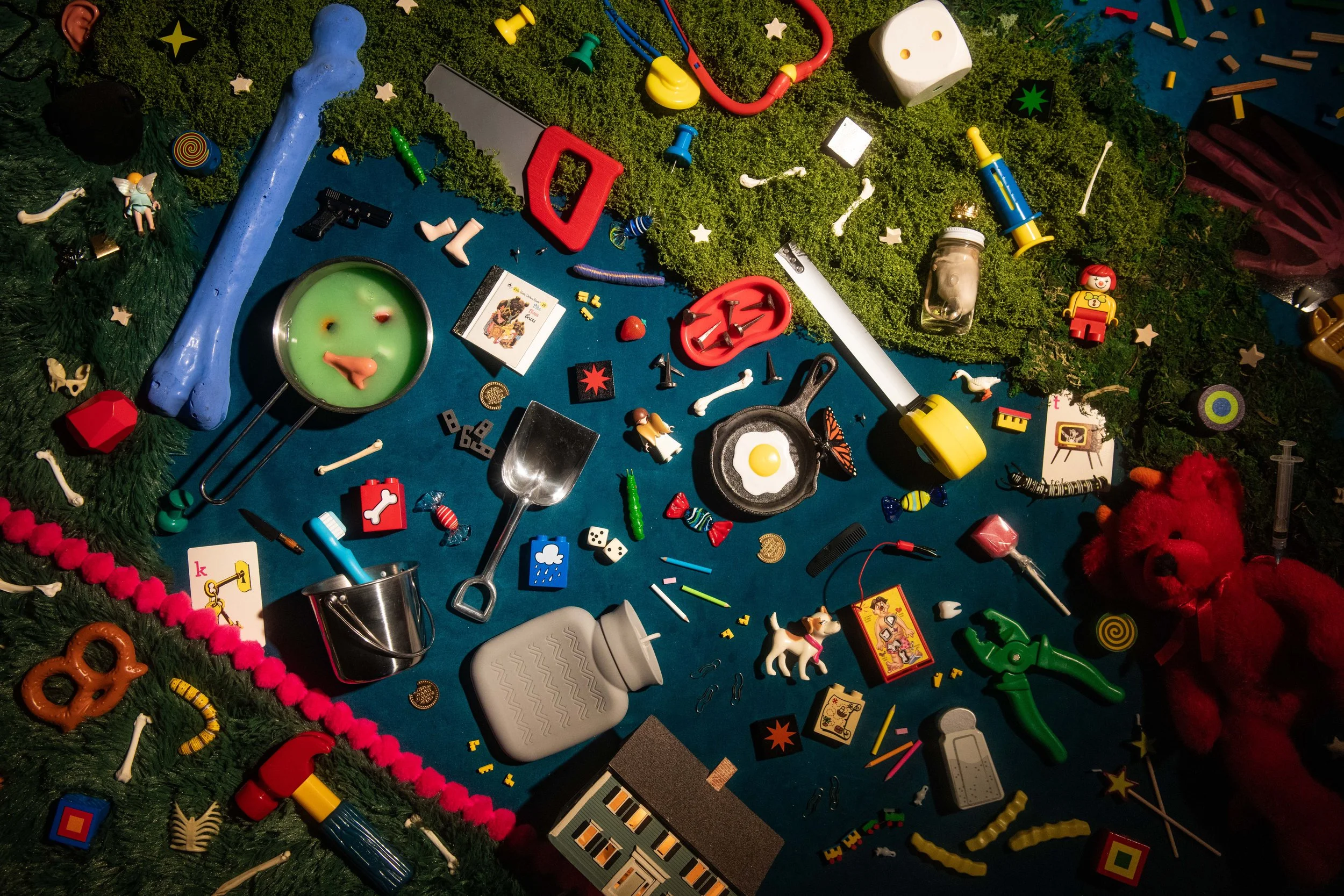
Jaina Cipriano, Not Quite It Seems, photograph in built environment
S.A.D.
I go through periods where food is unappealing but still necessary. It glistens, like plastic, before me on my plate. I love their shapes and colors even when I do not love their taste.
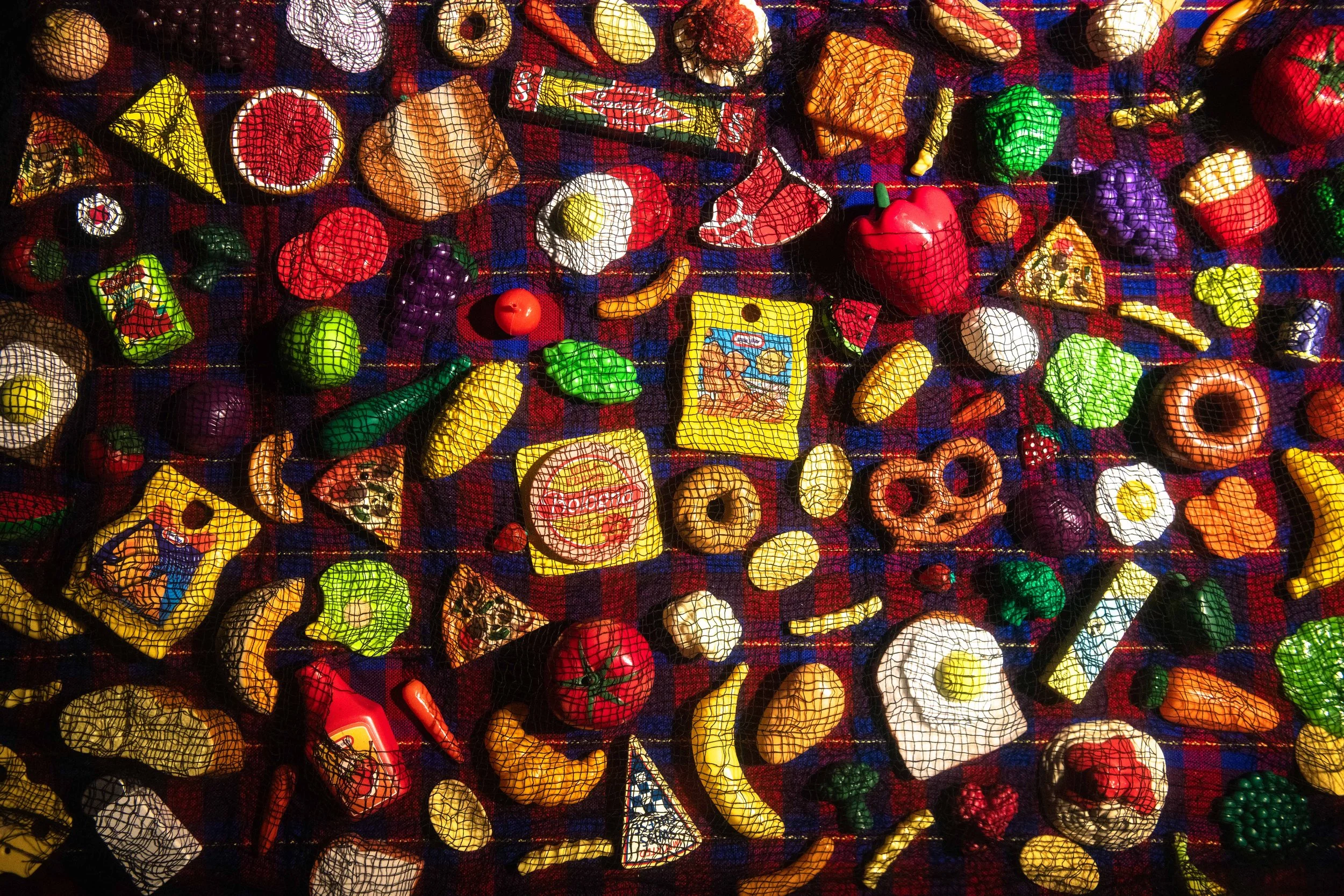
Jaina Cipriano, S.A.D., photograph in built environment
I couldn't consider portraiture via objects without thinking of Giuseppe Arcimboldo's densely packed portrait bouquets composed of flowers, fish, and vegetables. I wanted to try my hand at creating a kind of portrait bouquet myself. While reviewing the imagery I've collected over the years, photos of mutated daisies and dandelions appear repeatedly. Did these mutations exist in Arcimboldo's time? They feel new to me. I will represent myself as the new mutation, grinning.
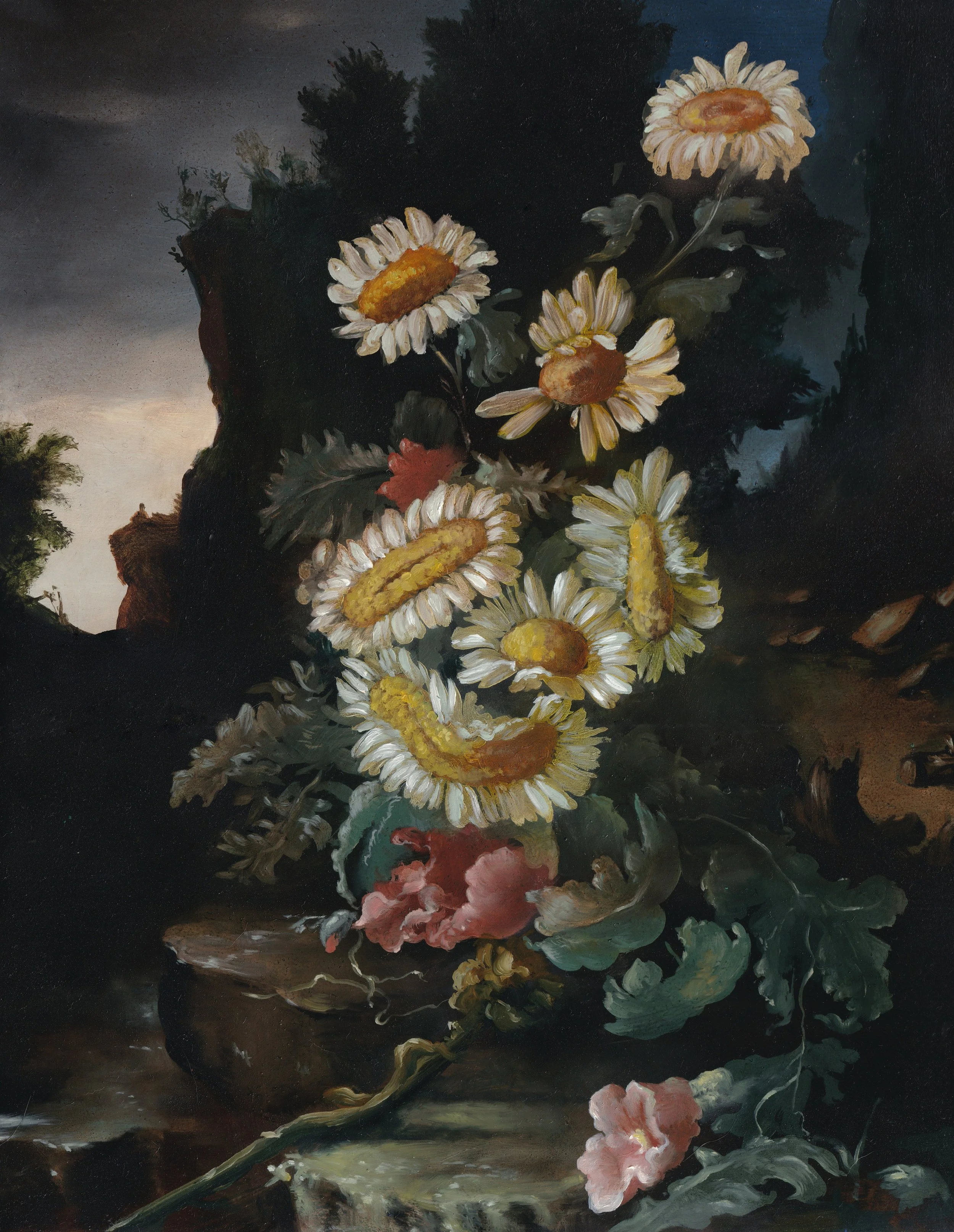
Nicole Duennebier, Self Portrait as Mutated Daisies (smiling), oil on panel
Getting to the Bag
Growing up in the inner city of Worcester, there were certain paths young men could take. Some of us choose paths to support and provide for our families, even if it means facing federal charges. As immigrants with parents struggling financially, you learn to have thick skin to create a path for yourself. This chapter of my life is nod to street culture and a version of me before activating my photo practice and stepping away as I moved to college to study Biology and see this other way of surviving and supporting my family.
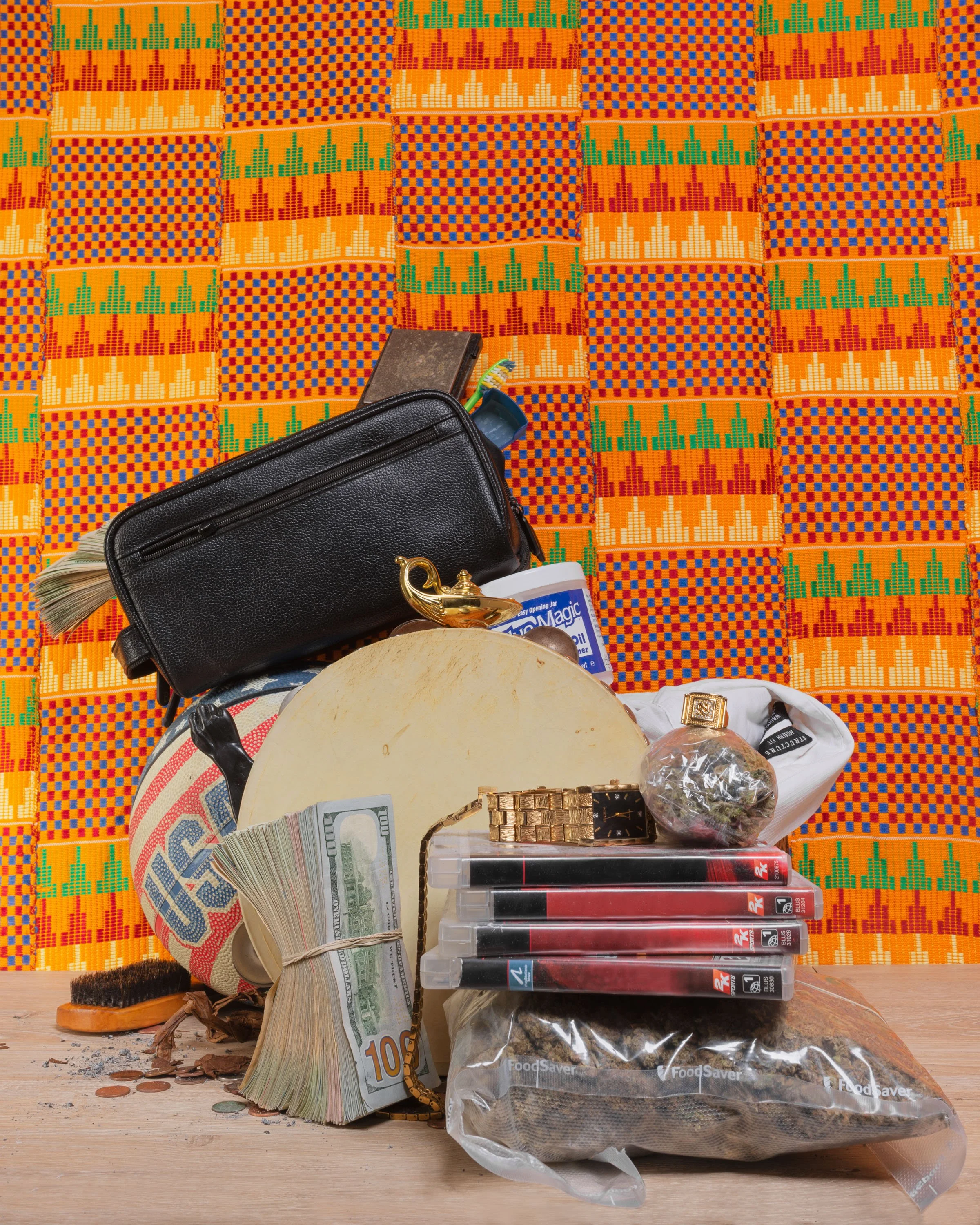
Claudio Eshun, Getting to the Bag, digital archival inkjet print
Untitled, (Self-Still)
Leaving your home country and not having access to it for about 20 years can feel alienating. I'm always thinking of my relatives and ancestors that I can't see or have access to, so that's why the image of my grandma Hannah is far back in the composition. I never grew up with my grandparents, but I always feel connected to them. It's me longing to be back home. As you view the middle of the image, you see a trail of archives made by my dad and scanned and reprinted by me to reuse in my self-portrait. The print closer to my grandma is my mom holding me as a baby, after that I’m in Italy sitting down on a swing, but it's abstracted with the last one closer to the viewer, so you see me when I moved to the U.S. and the pureness of not knowing what was to come. I encapsulate this with a bag that has printing of the Kente Cloth that I use with my photo equipment.
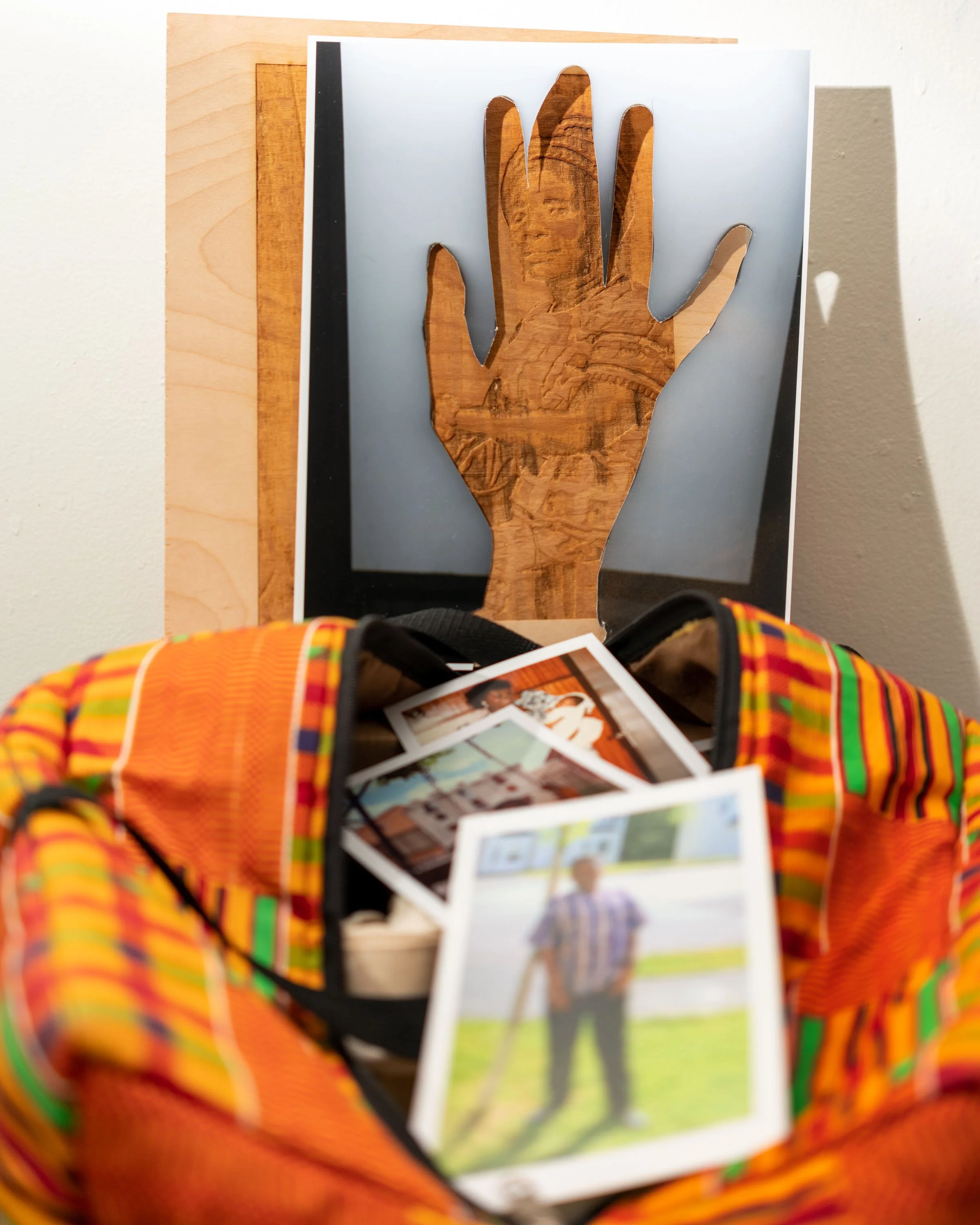
Claudio Eshun, Untitled (Self-Still), digital archival inkjet print
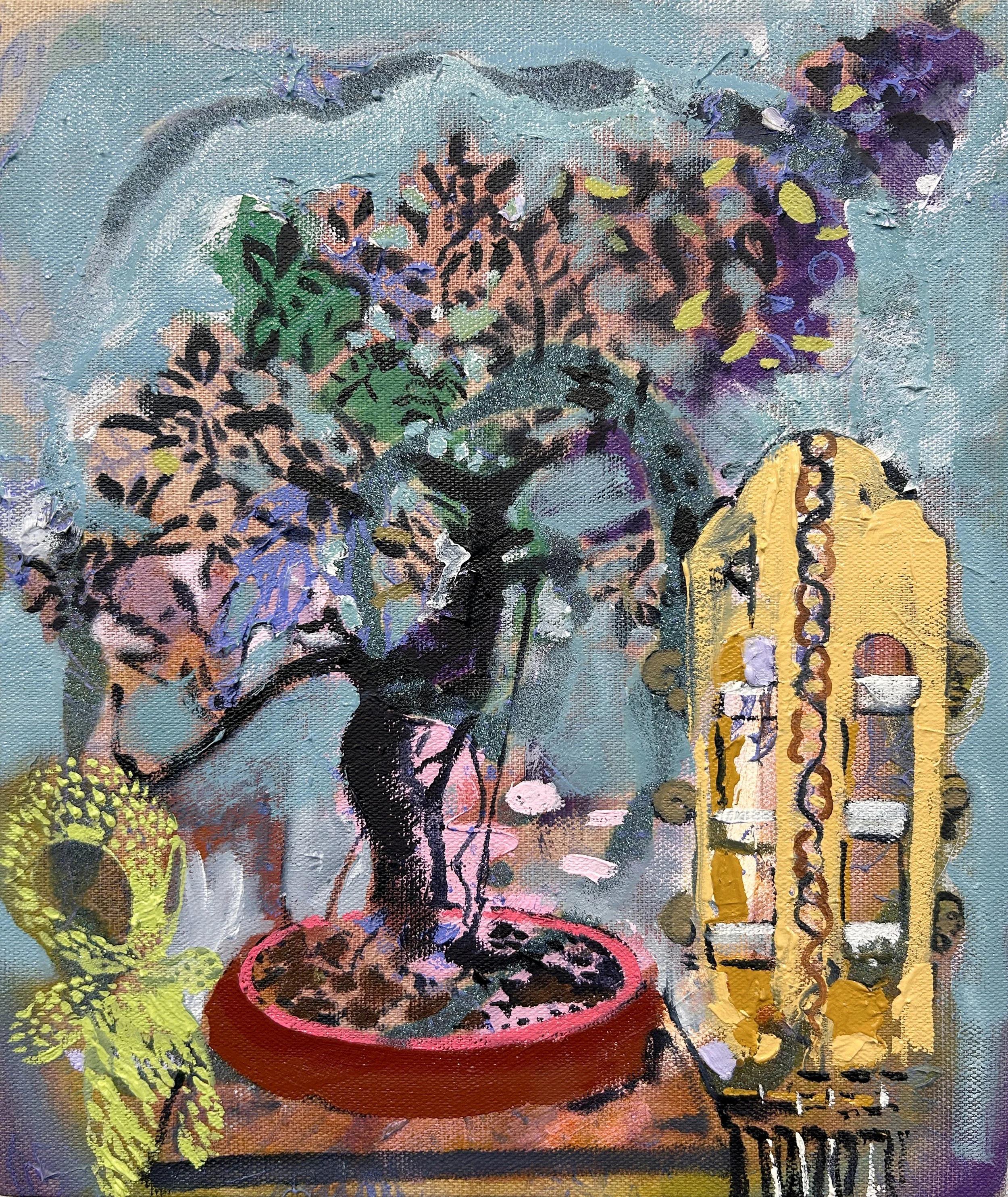
Andrew Fish, Still Life with Bonsai, oil on linen
I gathered three objects from my home to create this self-portrait; my guitar, a bonsai tree, and a crochet alien that my niece made for me. Instead of arranging them in a traditional still life, I used photos to collage a composition that was less literal. The bonsai tree is an example of my love for plants and the art of bonsai. It also symbolizes my desire to nurture life. The guitar was given to me by Jane Henson when I worked for the Jim Henson Company in NYC in the late 1990s and symbolizes my love of music and playing the instrument. And the knitted alien figure reminds me of my wonderful niece, Jessie, and how creativity and craft-making continue to run through my family.
Not for Real Life acts as a meta narrative of self-reflection. Using a Bluey plushie as a representation of childhood joy and purity, the borderline comical violence depicted against it serves as an allegory for the policing of joy and one’s inner child that I feel I’ve committed against myself out of fear of judgment from others. Simultaneously the intentionally provocative imagery that would lead a viewer to initially believe that I hate something seen as childish, like Bluey, engages with the belief I have that I am often misunderstood as a cold and angry person; a problem I perpetuate by masking my emotions with over the top humor and flippancy, which I have continued to do in this piece. However, the title itself gives up the chase since it references an often-repeated phrase in the show that someone would only know if they watched it.
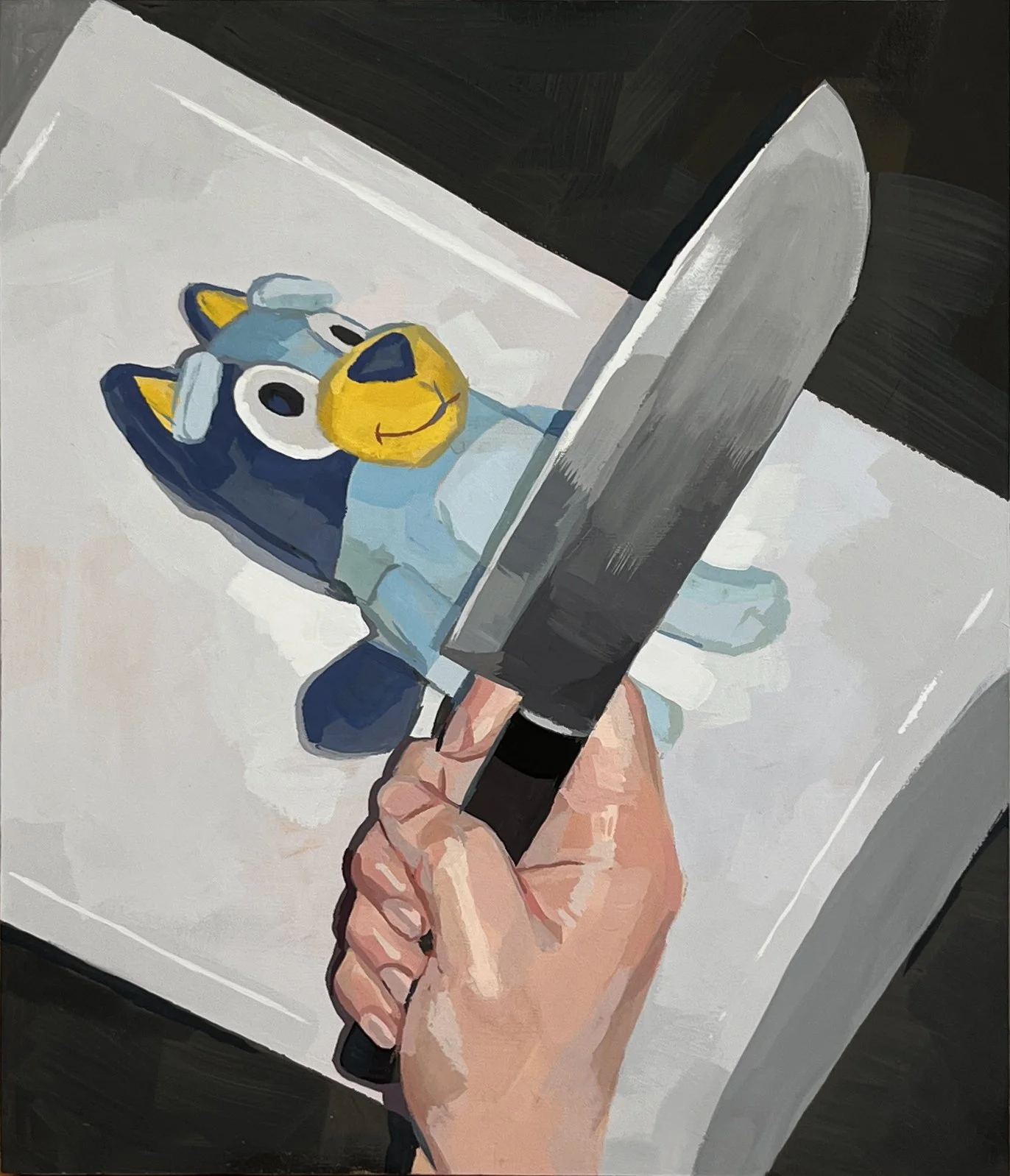
Catherine Graffam, Not for Real LIfe, acryla gouache on panel
Still Life with Blue Vase is a painting of one of my many collections. I think what one collects can tell a lot about a person. I collect small things any time I travel to different places. Each small object is a memory, a moment of my life. I acquired the blue vase along with found shells and beads in Thasos, Greece. It reminds me of a beautiful summer, a moment in time, lived and cherished, gone but not forgotten. I think collections are a lot like self-portraits revealing one’s interests, inclinations and even character traits.
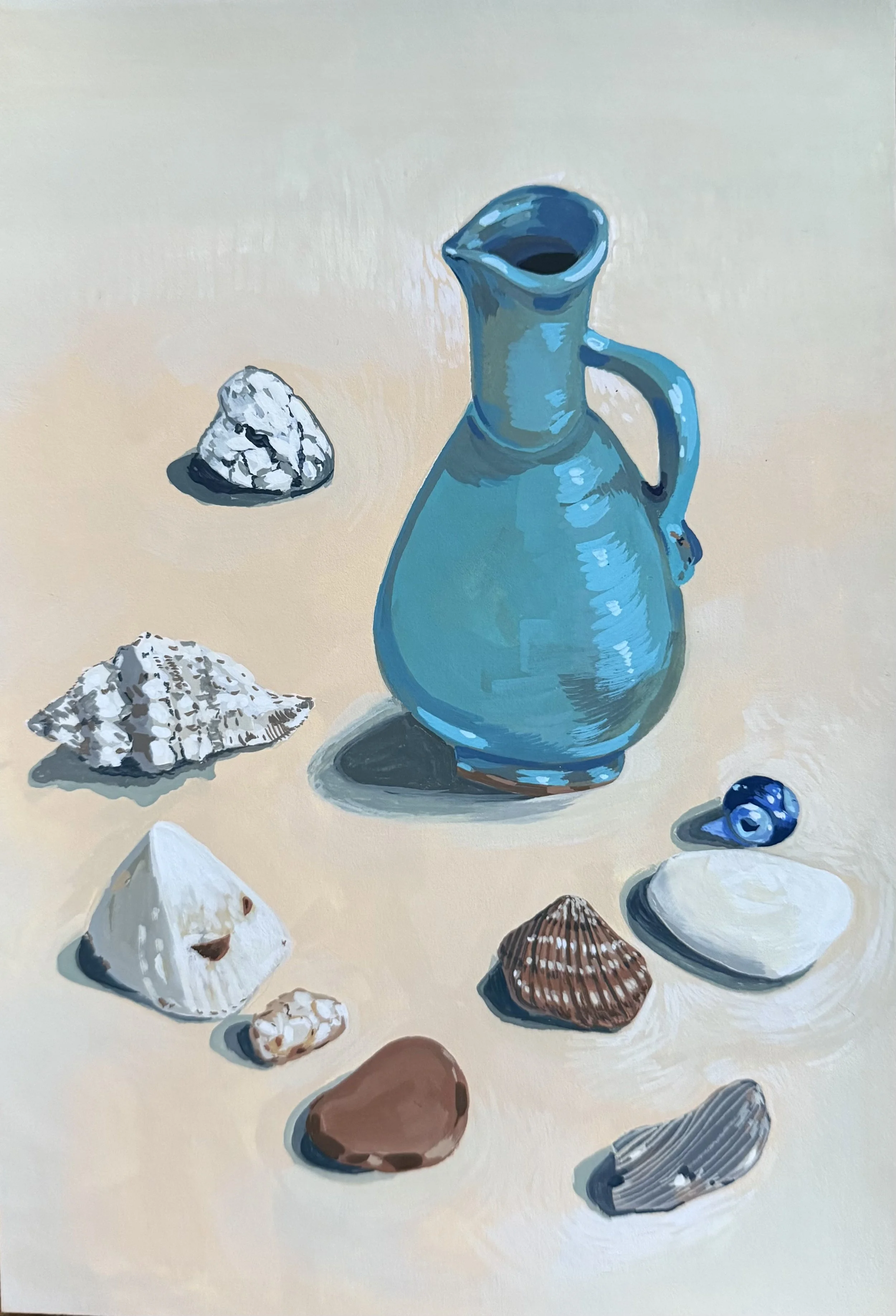
Boriana Kantcheva, Still Life with Blue Vase, gouache on paper
Still -Life with Roses and Parrot
Birds have appeared in my artwork for many years. In this painting I combine my love for parrots and roses. I have had parakeets for many years. It started in my childhood when my very first parakeet came into our yard, clearly lost, cold and hungry. I was allowed to keep the bird, and I have had many ever since. These small birds have become more than pets, they are companions and, in a way, symbolically they are my connection to my childhood. Along with roses that grew in my grandparents’ garden they have become representations of my roots and connections to the past.
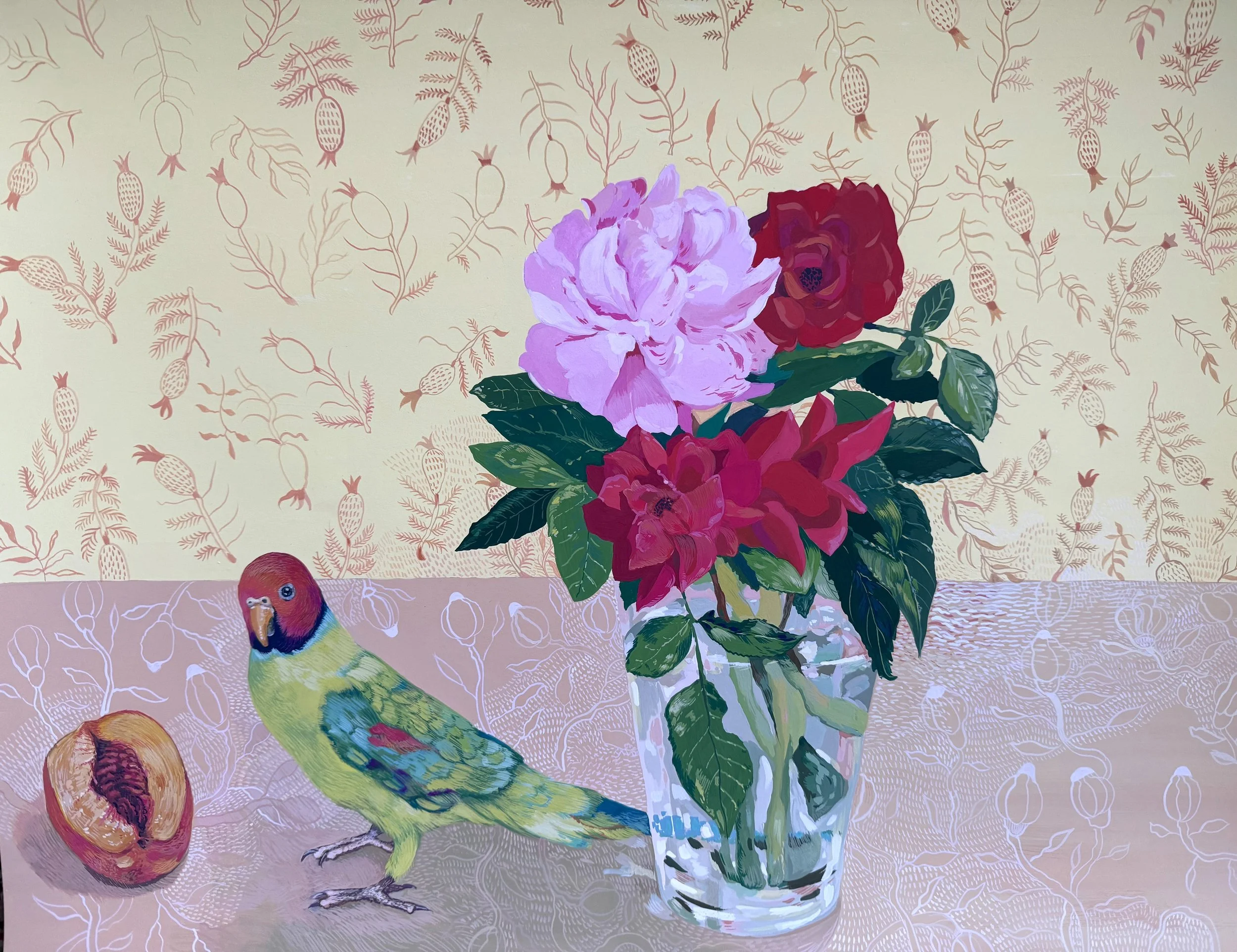
Boriana Kantcheva, Still Life with Roses and Parrot, gouache on paper
Lucretia, Under Pressure is a snapshot of the pressures the artist feels under the current sociopolitical environment. Specific books allude to the various factors contributing to his current anxiety, be they political, interpersonal or philosophical. The elements of this still-life come together to express how the artist feels in a world full of mounting pressure. The figure of Lucretia is seen presiding over this array of objects. In history, Lucretia was a noble woman in ancient Rome who was raped by the king’s son. Feeling pressured by the stigma society would place on her, and her helplessness in the face of such absolute power, she killed herself. Her death has been mythologized as one of the inciting factors in the revolution that led to Rome becoming a republic and removing its monarchy. With the way the current administration subjugates its people and covers up the vile actions of many in positions of power, the artist relates his own reality to that of the Roman monarchy, and wonders what event we need to see in order for the people to oust the current administration.
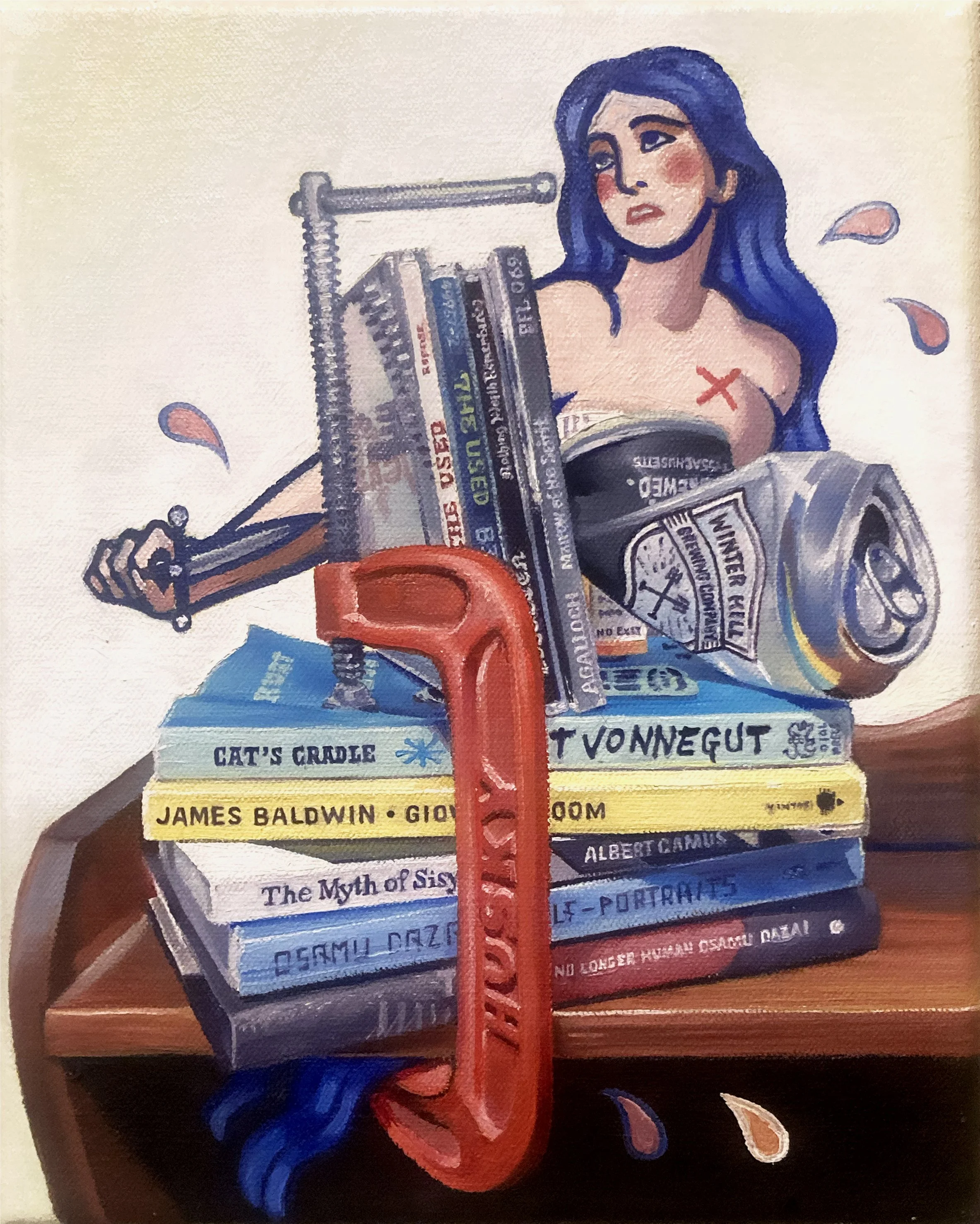
Dorian Keeffe, Lucretia, Under Pressure, oil on canvas
A Portrait of the Artist as a Young Man is a self-reflective vanitas. Through books he has read at key moments in his past, the artist reflects on his own life. This curated collection of well read books paints a picture of a man who has spent his life thus far struggling for purpose, belonging, and to understand himself. The looming skull reminds the artist of how fleeting these moments of his life have been and call into question what the value is of struggling when it will be wiped away by death in the end. Should the certainty of death render his efforts to build a life meaningless or does the sense of transience it invokes make these moments in life vital?

Dorian Keeffe, A Portrait of the Artist as a Young Man, oil on canvas
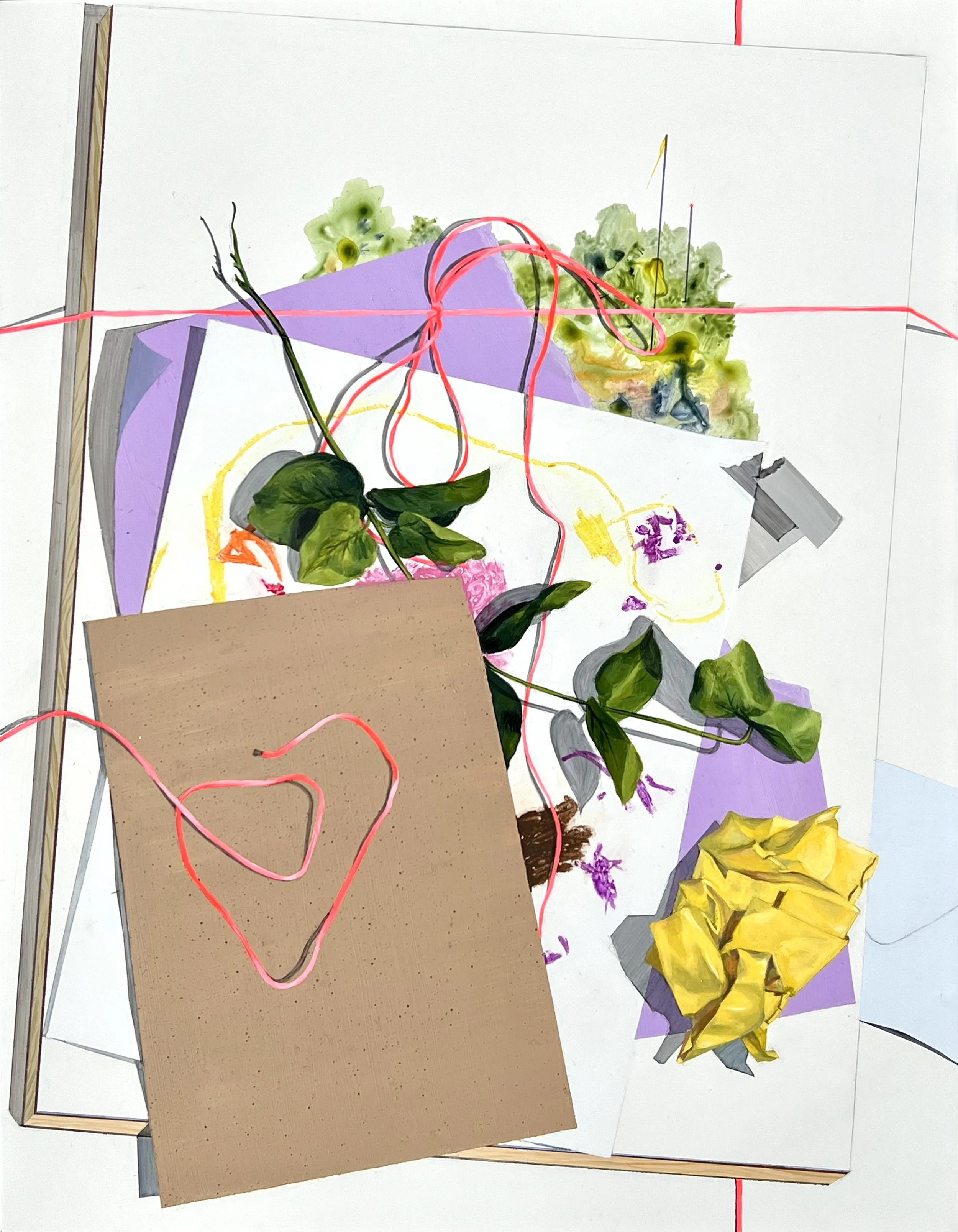
Lindsey Kocur, The Source, acrylic, oil pastel, gouache, ink and pencil on panel
I chose to depict an assemblage of objects and materials from my studio as a meditation on the relationship between creativity and identity. While the selected objects carry their own associations and significance, a wider concept pervades: What remains central to your sense of self when you are no longer your first priority? Parenthood necessitates sacrifice and change, but also ignites purpose, worry, determination and profound love. While my identity is not solely distilled to either my studio work or motherhood, creative practice is something I view as an essential, grounding element. For me, art-making is a source of contemplation and calm, lending agency to express and evolve or even resist.
Stacked paintings in various stages of completion are layered with materials and objects and bound with neon string. Papers in different shades, torn and curled or crumpled, simultaneously serving as surfaces, mediums, and reference material. They are utilitarian, fragile, and imperfect yet resilient with the potential for becoming something new. A child's drawing explores a page with colorful marks and a rough spiral — a recurrent theme that intrigued me enough to bring it into my workspace. Atop it rests a sprig of greenery, connecting to natural elements that inspire much of my work. The assembled pile is partially bound, in a manner of organized chaos — the result encapsulates converging processes, interruptions, and explorations.
Melissa Krok-Horton
2026 is the year of new housing. My husband and I have lived in our apartment for ten years, but after the introduction of an aggressive new management company and a major increase in rent, we’ve accelerated steps towards purchasing a modest condo. As someone who is averse to change, especially in major aspects like housing, this particular moment feels alternatively charged with unease and hope.
We started the painful process of shedding unneeded things early to make the eventual move easier. In January and February we bought, packed, and stored eight large plastic tote bins of our belongings. These bins contain what we've acquired together over the past 14 years of our relationship. The items have too much nostalgia to dispose of but not enough usefulness to keep on hand in the short-term. We've been cut-throat in our selection of what stays and what gets donated, but it's amazing how much has remained.
This tenderly rendered drawing of three plastic bins, jam-packed with belongings and left intentionally vague as to their contents, is my of-the-moment self-portrait. Hopefully within the next year I’ll be unpacking these bins into the next chapter of my life.

Melissa Krok-Horton, Three Bins of Things I Don’t Need and Can’t Live Without
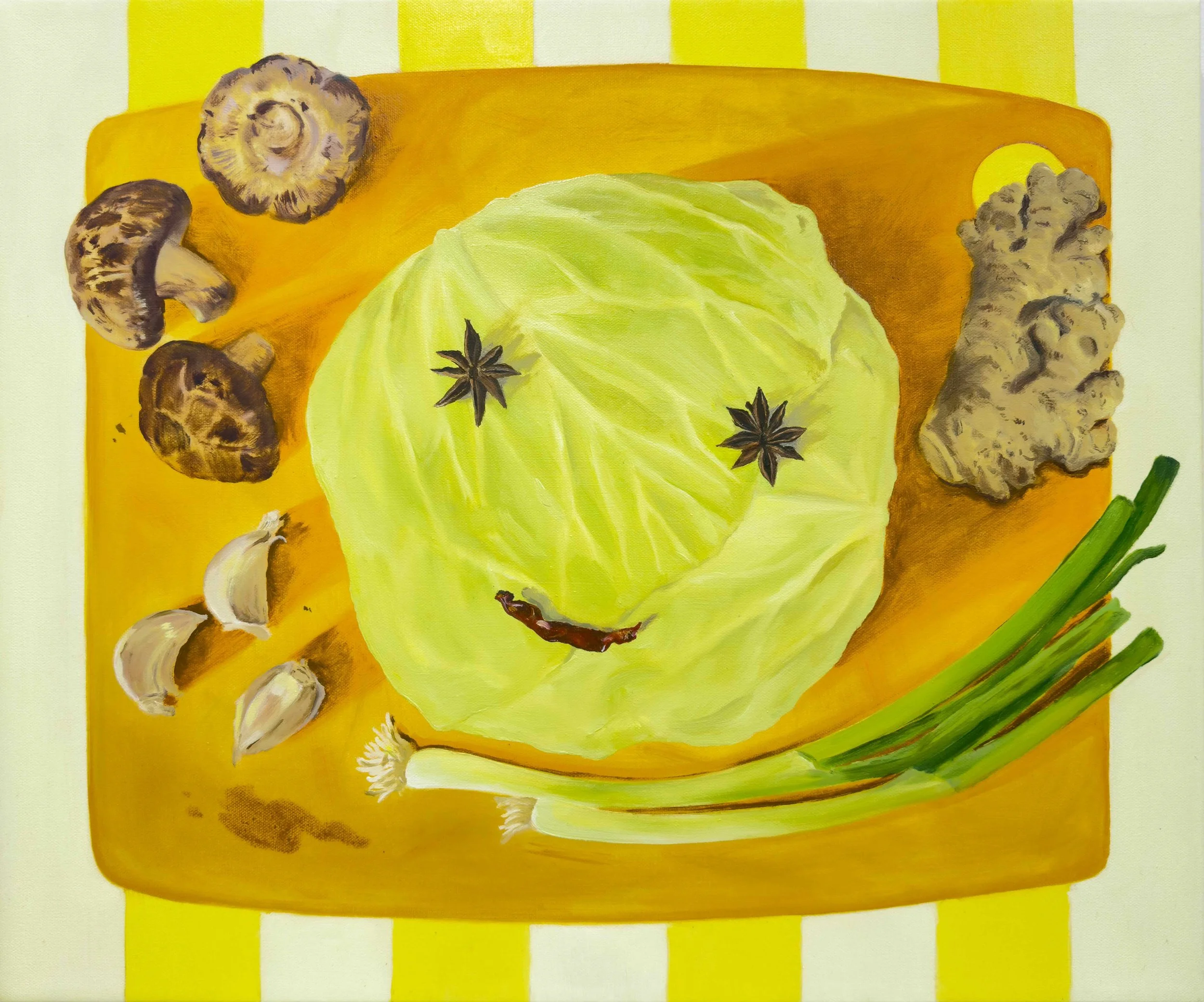
Chen Peng, Stir Fry Taiwanese Cabbage, oil on canvas
I’ve been vegetarian for 17 years, and veggies are so important to me (I love everything except winter melon). Taiwanese cabbage can usually only be found in Asian grocery stores in the U.S., but it’s a must-have in my fridge. Its leaves are thinner and perfect for a quick stir-fry with garlic and shiitake mushrooms, Taiwanese style.
At the Window
Diamond leaded windows
Picture window
Parlor
Living room
Room with a view into the woods and places not far behind
Woods that lead to a tire swing hanging precariously that everyone loves to ride
Windows with their filtering light gently casting shadows on a child’s crayon drawings
Windows that hold all the snow of winter and watch while a toboggan races (too fast!) down an icy path
Windows that then open to summer and freshly mowed lawn and sunflowers that grow to 6 feet tall - !! - only to bow, yielding, to the warmth laden sun
And finally, windows that weave me down a hill and back up the other side to land me right back to where I began
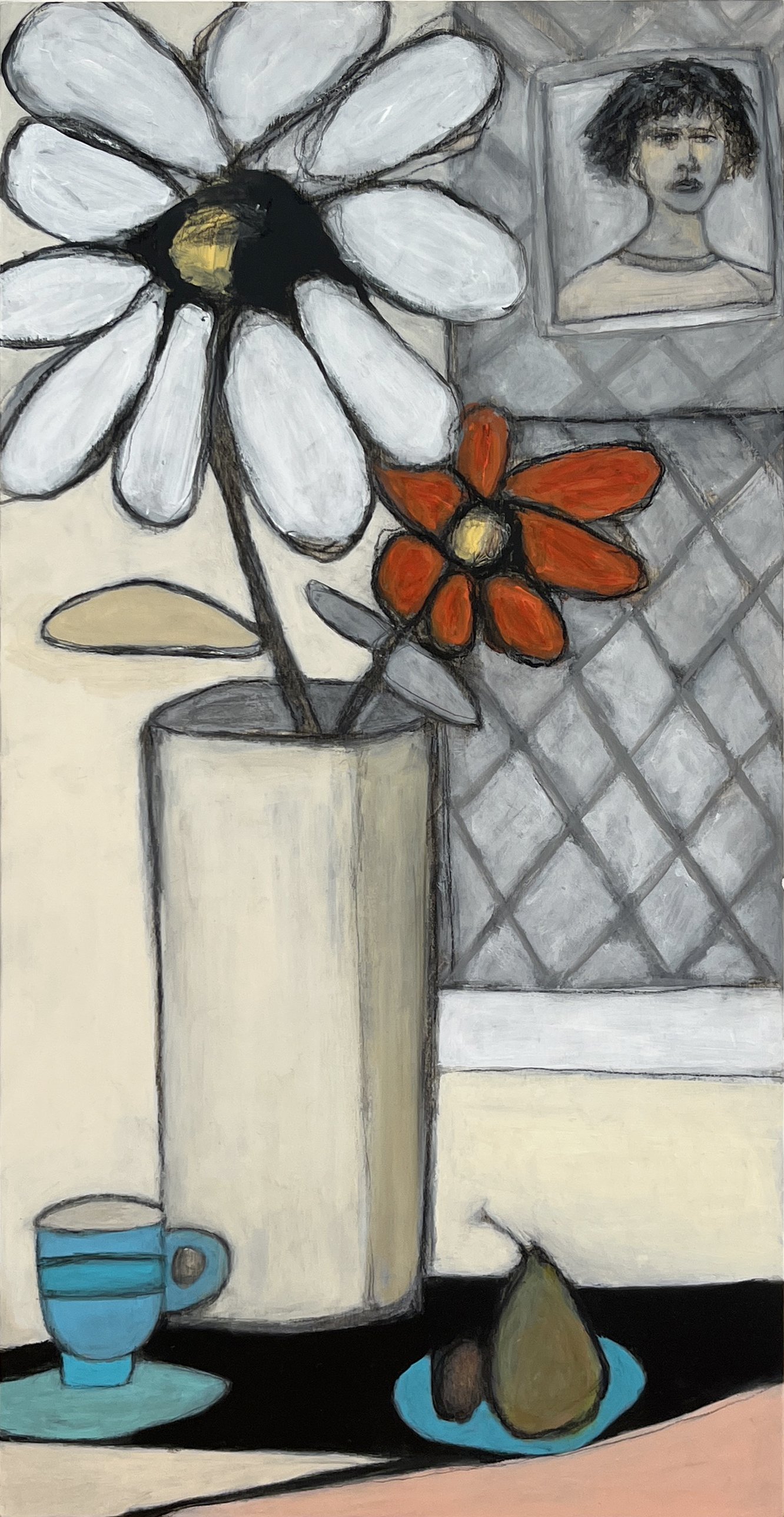
Karla Quattrocchi, At the Window, acrylic, oil, pastel, pencil and charcoal on panel
My house is filled with books. Not all are mine but I do possibly have an unadvisable amount. Some of our bookshelves (and there are bookshelves in every room and the hallway) have two rows of books out of necessity for storage. I have stacks like in that early scene in the library in Ghostbusters. Someday I will read some of them, though a lot I have for the pictures (for reference). It's not unhealthy, but it is difficult to rearrange furniture. I think the books you own say a lot about who you are, read or unread. They show visitors what you are interested in. They sometimes remind you what you are interested in. They are for information and entertainment and the ones you have and display gives a pretty good window to what informs and entertains you. Or at least mine do for myself. This is one shelf in my house and includes some other things that give a better sense of who I am. I am a big fan of miniature things and maritime imagery and water towers (which make me feel more at home than anything else) and art.
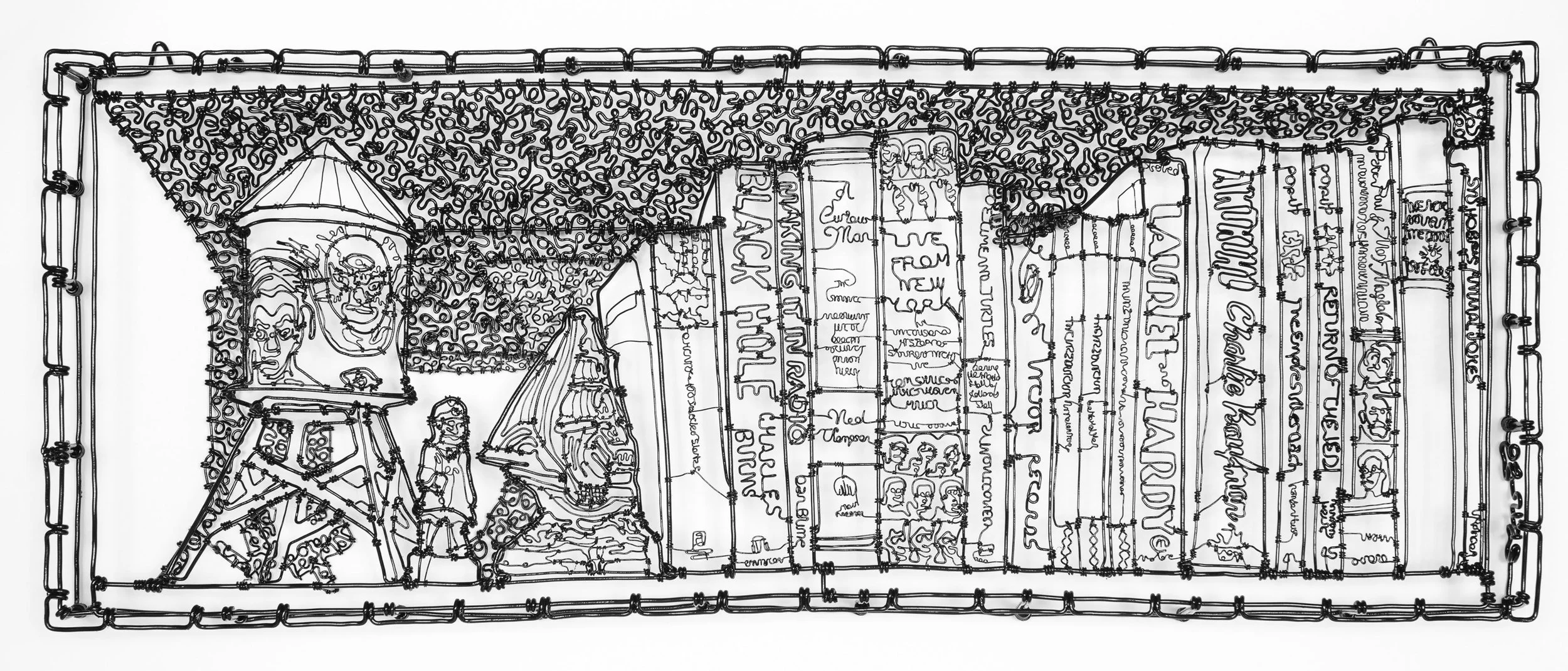
CW Roelle, I've Been Meaning Part 1, painted steel wire
The items included in my still life include:
Books:
-Syd Hoff's Animal Jokes, Syd Hoff
-The Acme Novelty Library Date Book- 1986-1995, Chris Ware
-Peter, Paul and Mary Magdalene (The Followers of Jesus in History and Legend), Bart Ehrman
-Return of The Jedi pop-up book
-The Empire Strikes Back pop-up book
-Antkind, Charlie Kaufman
-Laurel and Hardy, Randy Skretvedt
-Dr. Cholmondley Repents: A Sides, B Sides and Seasides, The Jazz Butcher
-The Wasted Years, The Jazz Butcher
-The Violent Years, The Jazz Butcher
-Victor Records Catalog - 1939-1940
-Of Time And Turtles (Mending the World Shell by Shattered Shell), Sy Montgomery
-Live From New York (An Uncensored History of Saturday Night Live), Tom Shales and James Andrew Miller
-A Curious Man (The Strange and Brilliant Life of Robert "Believe it or Not" Ripley), Neal Thompson
-Making it in Radio, Dan Blume
-Black Hole, Charles Burns
-100 Selected Stories, O. Henry
-Clipper ship bookend
-Little carved wooden sea captain with a peg leg
-Los Luchadores - El Prieto, El Watchalo, La Tuya and El Duce by Raul Gonzalez (gouache on cardboard water tower)
Terrarium
I created Terrarium in 2018 and Indoor Kids in 2026 - 8 years apart from one another. Despite their stylistic differences, I can say that both portraits are trying to express a yearning for something unnamable and a perceived helplessness to attain it. Terrarium functions more as a documentation of what I was experiencing at the time, whereas Indoor Kids is more a retrospective analysis. When I made Terrarium I was living with my wife at her mother’s house and barely making a living. I was ambitious and passionate about what I was doing but felt stuck in a miserable situation I felt wholly responsible for. The mirror I used for my likeness had an old clock and a peg board for hanging jewelry situated next to it, which, in the painting, became symbols of my meager artistic accomplishments up to that point and the time I felt was rapidly passing me by. There is a feeling of impotence in this portrait. The arid environment I placed myself in seemed to accurately capture my numbed emotional state as I worked away in social isolation and fretted for my future.
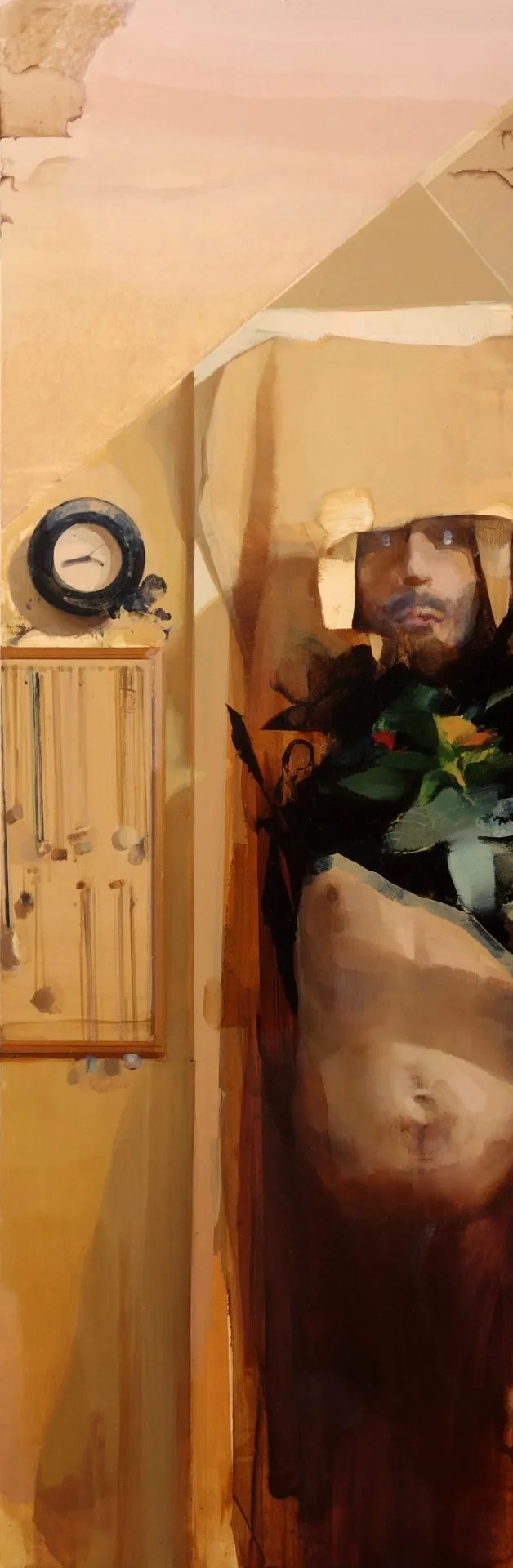
Mike Ryczek,Terrarium, oil on panel
Indoor Kids is a lightly self-effacing term referring to people who spent their childhoods obsessively consuming media indoors instead of socializing. While I certainly spent time playing outdoors with other neighborhood kids and had some healthy friendships in my youth, I would generally tend toward indoor activities and shy away from team sports, birthday parties and other large social events which would cause me stomach-churning anxiety. I chose the diamond as a stand-in for myself as a child: a kind, polite, at times even affable boy who was nonetheless full of angst and debilitating self-consciousness, and who would usually try to mask it. Its multi-layered facets suggest a nervous, scattered mind. The hanging drip looked to me like sweat or semen, symbolizing a strong desire to intimately connect with others that, over time, had been bottled up and unrealized. The 8-bit border claustrophobically wrapping around the shape is a not-so-subtle nod to the video games, books, films, tv shows, card games, music and other forms of media that I and many other introverted kids have and continue to use as a method of escape from a reality that they find unsatisfactory. They served me as both a salve and, arguably, an inhibiting force when I used them to keep other people at arm’s length. In my teens and for most of my twenties I struggled with alcoholism, which, in my case, was yet another form of retreat from the social anxiety that continued to keep me physically and emotionally “indoors.”
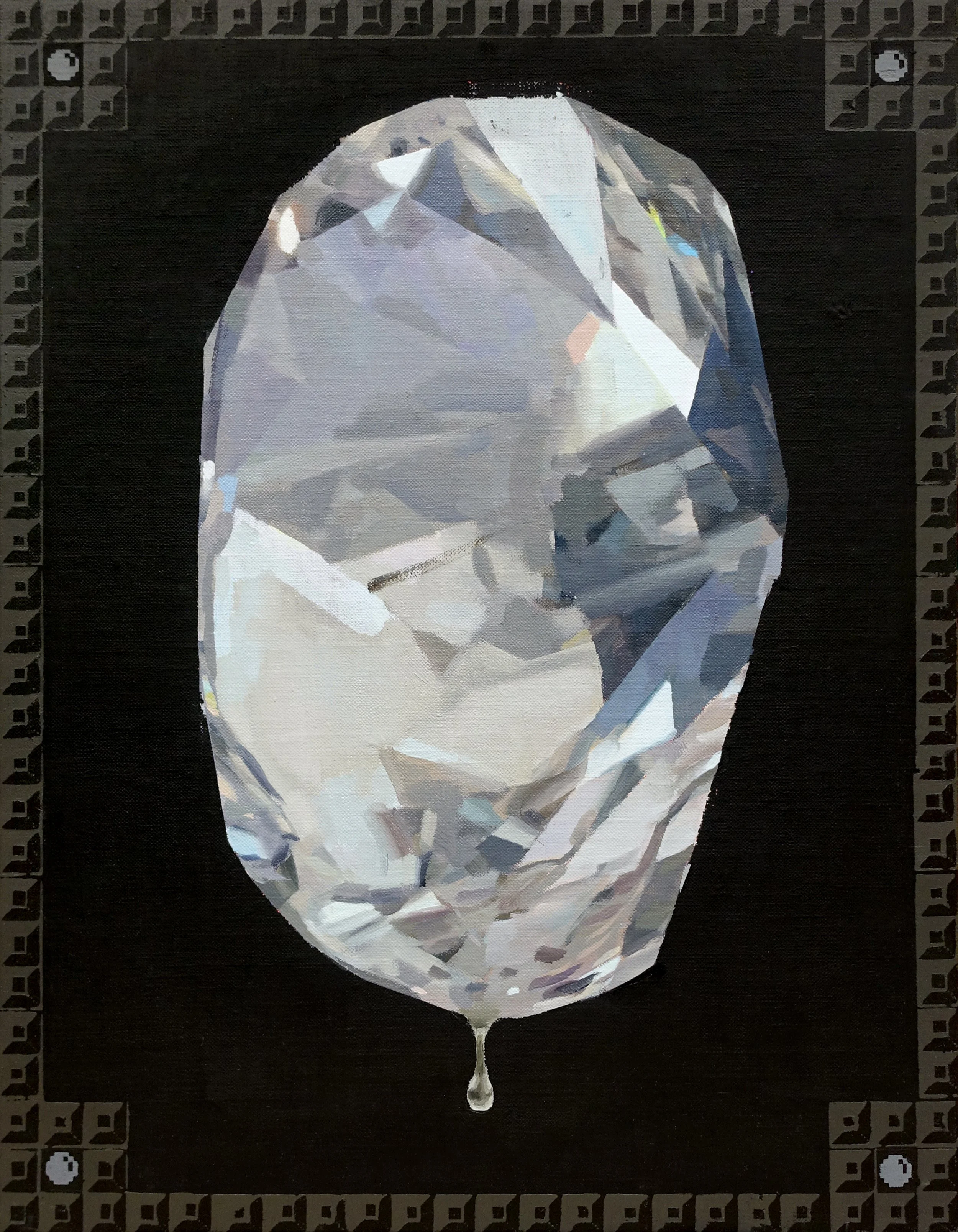
Mike Ryczek, Indoor Kids, oil and acrylic on canvas
My first impulse when [Gallery Director Caitee Hoglund] approached me about this show was to work with objects, rather than craft a traditional self-portrait. I’ve always incorporated symbolic and found images into my work, and I’m interested in the mystery created when a representational object is re-contextualized. After gathering a large pool of images that resonated with me (my own drawings, mythological & spiritual references, nature imagery and photographs), I experimented with different groupings and ink combinations, allowing chance to play a role in the final compositions. The RISO process felt right for these prints in that the saturated inks, and the way they interact when layered, lent additional mystery to the imagery I’d assembled.
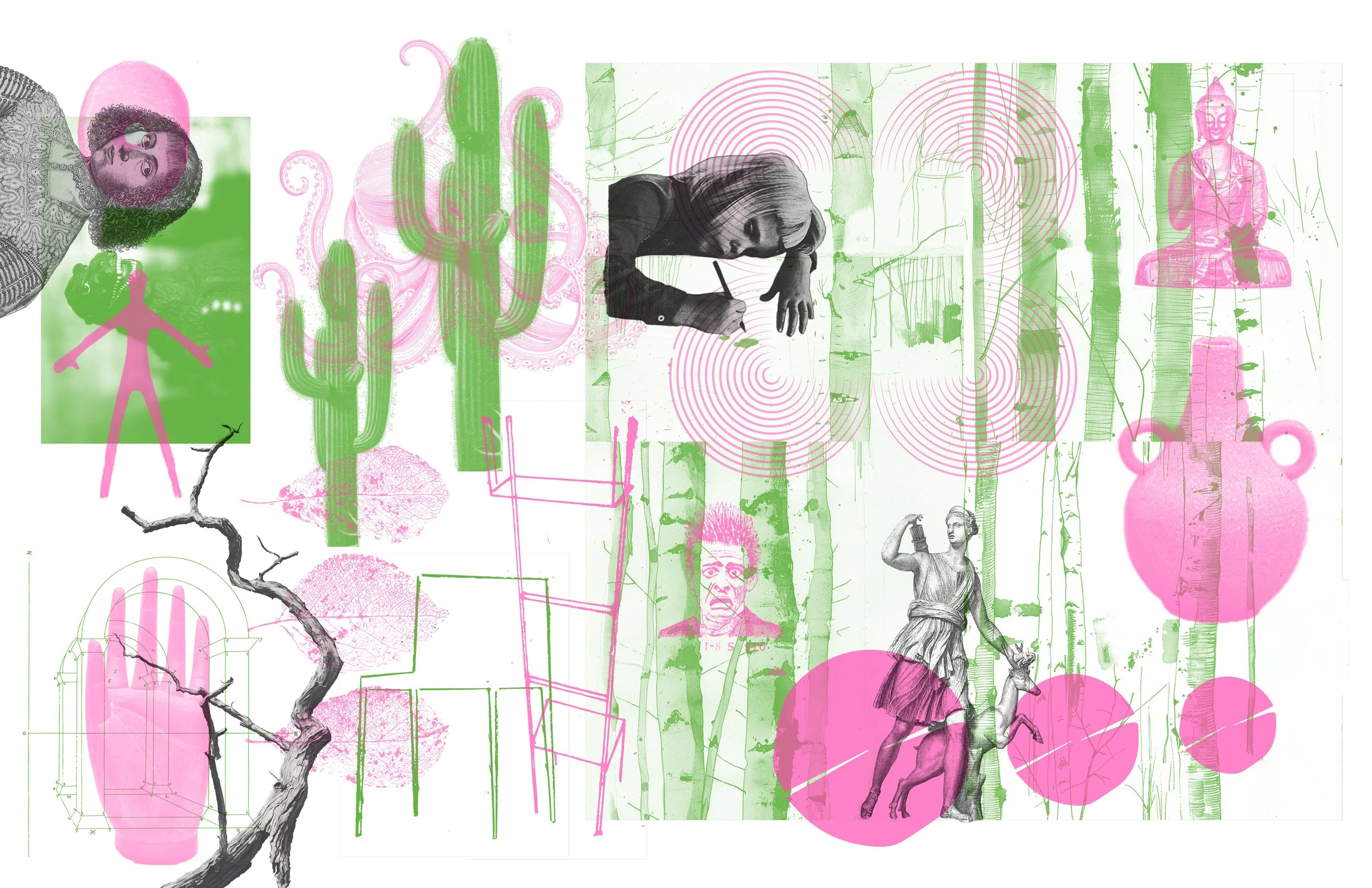
Nina Wishnok, The Contents of Consciousness, risograph
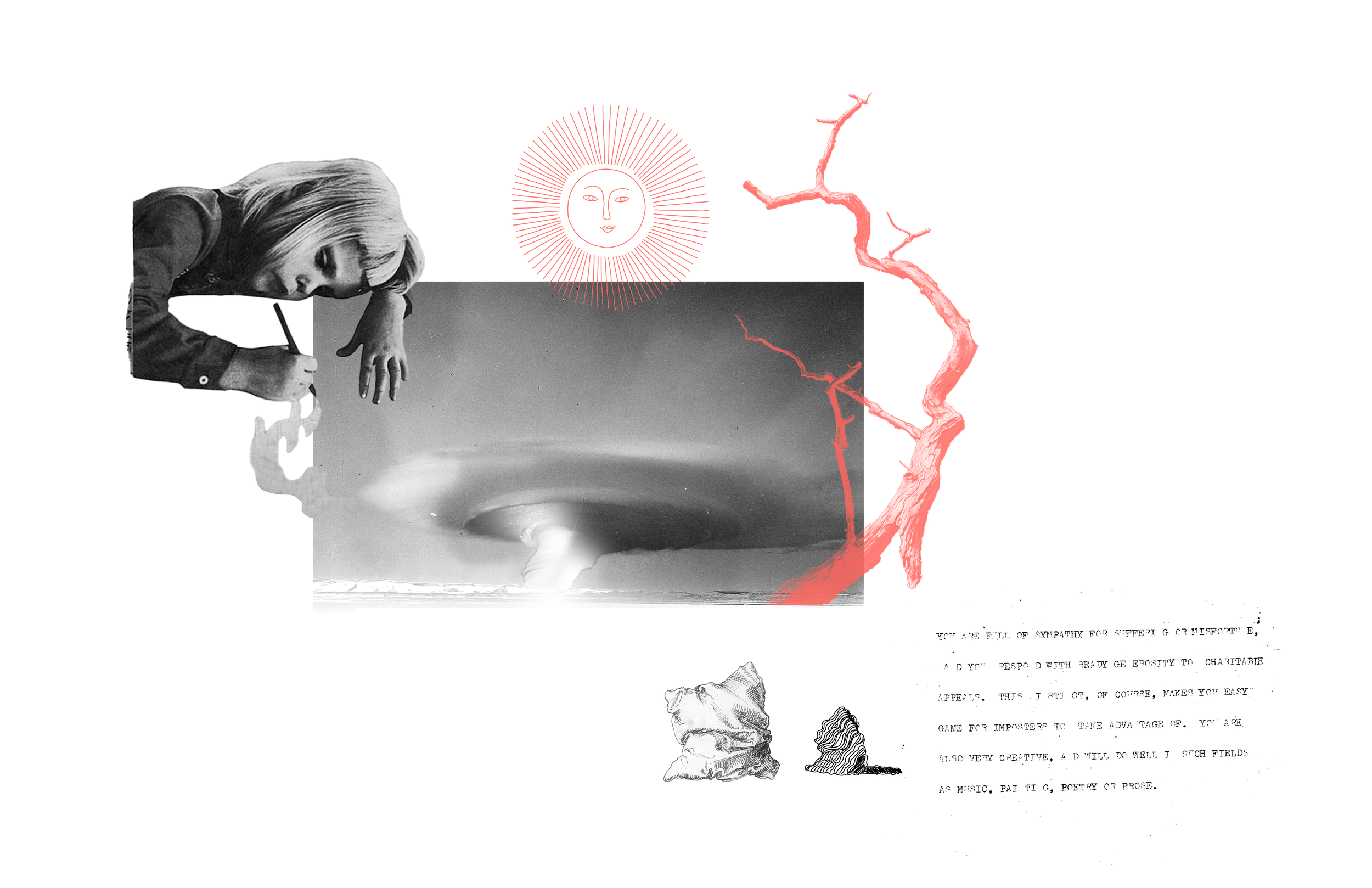
Nina Wishnok, Tempest (1/5), risograph
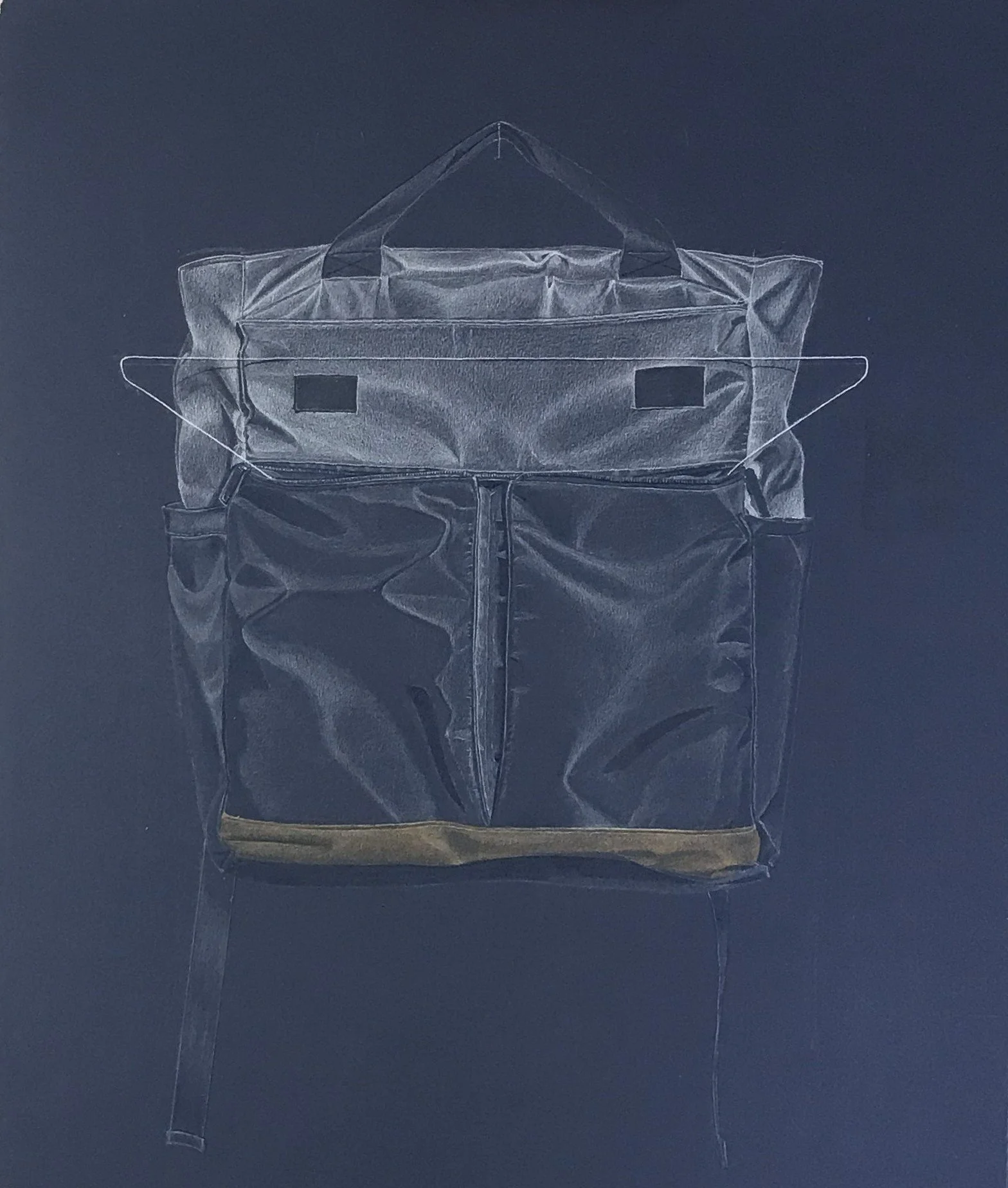
Mark Zieff, Self Portrait, colored pencil on Canson paper
There's a natural human desire to see faces, known as pareidolia, in random objects like the Man on the Moon, shapes in clouds, and faces on cars or kitchen appliances. It's an evolutionary survival mechanism that enables us to rapidly identify threats. I found this bag, or it found me, purely by accident at Savers during a recent prop gathering trip. Staring out from all the backpacks and duffle bags I saw a face. The face seemed surprisingly familiar and I thought it would be interesting, if not artistically relevant, for me to use this bag as a way to explore my own appearance.